the solution

How to Dispute Bad Leads in Google Local Services Ads (LSAs) - Updated for 2026

Google has updated how Local Services Ads leads are reviewed, using automation to apply credits in some cases while tightening dispute eligibility. This guide explains how LSA disputes work today, what still qualifies, and how contractors can avoid wasted spend by setting profiles correctly and managing lead feedback consistently.

Adrian Garcia

Ad Strategist
Last Updated:
April 2, 2026
5 minute read

Key Takeaways:

  • Google eliminated manual LSA lead disputes in mid-2024. The old system where you could flag a lead, select a reason, and get a credit within 48 hours is gone.
  • The replacement is an automated credit system. Google’s machine learning reviews leads within 72 hours of being charged and applies credits automatically for leads it deems invalid. Credits appear within 30 days.
  • You can still influence the system through lead ratings. The “Rate this lead” feedback tool in your LSA dashboard isn’t just a survey — marking a lead as “Very dissatisfied” with a specific reason can trigger a credit.
  • Profile setup is now more important than ever. Google no longer credits leads for “job type not serviced” or “geo not serviced.” If your categories and service areas are wrong, you pay for every mismatched lead with no recourse.
  • LSAs are a supplement, not a system. Contractors who depend entirely on LSAs are one policy change away from losing their pipeline. The most predictable growth comes from LSAs, Google Ads, SEO, and brand working together.

What Changed with LSA Lead Disputes?

If you ran Local Services Ads before mid-2024, you remember the process. A bad lead came in — wrong number, spam, someone outside your service area — and you logged into the dashboard, selected the lead, chose a dispute reason, and submitted. Google reviewed it, usually within 48 hours, and credited your account if the dispute was valid. It wasn’t perfect, but you had control.

That system is gone.

In July 2024, Google began rolling out an automated lead credit system that replaced manual disputes entirely. The rollout was completed by August 2024.¹ Under the new system, Google’s machine learning reviews every charged lead and decides whether it qualifies for a credit. You don’t file a dispute. Google’s algorithm makes the call.

Two major categories that previously qualified for manual disputes no longer earn credits at all: “job type not serviced” and “geo not serviced.” That means if a homeowner calls you about a service you don’t offer, or from a zip code outside your area, Google will not credit you — even if the lead was obviously irrelevant.

How Does the Automated LSA Credit System Actually Work?

Google’s automated system reviews charged leads within 72 hours. If the system determines a lead is invalid — spam, wrong number, duplicate, or otherwise low quality — it applies a credit to your account automatically. Credits typically appear within 30 days.

In your LSA dashboard, you’ll see lead statuses that reflect this process:

  • Not charged: Google filtered this lead before charging you. It detected low quality or a duplicate before it hit your account.
  • Charged: Google reviewed the lead and determined it was valid. You paid for it.
  • In review: The lead is being evaluated. A credit may or may not be applied.
  • Credited: Google charged you initially, then reversed the charge after determining the lead was low quality.

Google claims the automated system credits more leads overall than the old manual process. That may be true in aggregate — contractors who never bothered to dispute leads are now getting some credits automatically. But for contractors who were disciplined about disputing every bad lead, the new system often feels like a downgrade. You’ve lost control, and there’s no way to appeal a decision you disagree with.

How Do You Get Credits for Bad LSA Leads in 2026?

Manual disputes are gone, but you’re not completely powerless. The lead feedback rating tool is your primary lever. Here’s how to use it:

  1. Open your LSA dashboard and navigate to the Leads tab.
  2. Find the lead in question and click “Rate this lead” in the top right corner.
  3. Select “Very dissatisfied” — this is the only rating that can trigger a credit review. “Somewhat dissatisfied” provides feedback but rarely results in a credit.
  4. Choose the most specific reason: Spam, geographic mismatch, wrong service, solicitation, or duplicate lead. Vague reasons get ignored.
  5. Submit within 30 days of the lead date. Leads rated after 30 days are not eligible for credits.

This is not as reliable as the old dispute system. Based on what we see across the LSA accounts we manage, the feedback-to-credit conversion rate is roughly 15–25% — meaning you’ll get credits on about one in four to one in six bad leads you flag. That’s better than doing nothing, but it’s not the 50%+ success rate contractors saw with manual disputes.

Rate Every Lead, Every Time
Even when your rating doesn’t trigger an immediate credit, it trains Google’s algorithm to send you better leads over time. Contractors who rate every lead consistently — both good and bad — report better lead quality within 60–90 days compared to those who ignore the feedback tool entirely.

How Do You Stop Bad LSA Leads Before They Happen?

The best defense against bad leads is preventing them, not crediting them after the fact. Under the new system, your LSA profile configuration is the most important thing you control.

Tighten your service categories

LSAs group services into broad categories. “Remodeling” includes kitchen remodels, bathroom remodels, additions, and more. If you only do kitchens and bathrooms, make sure your job types reflect that. Every job type you leave enabled is a door open to mismatched leads you can no longer dispute.

Narrow your service area

Set your service area to only the cities and zip codes you actually serve. If you’re getting leads from areas 45 minutes away, your service area is too broad. Under the old system, you could dispute those. Now you pay for them.

Match your LSA profile to your Google Business Profile

Since November 2024, Google requires your LSA and GBP profiles to be linked and consistent. Mismatches between the two — different phone numbers, different service areas, different business names — confuse Google’s algorithm and can result in poorly targeted leads.

Answer the phone during business hours

LSA ranking is heavily influenced by responsiveness. Contractors who answer calls within minutes rank higher and get better leads. Letting calls go to voicemail hurts your ranking and your lead quality. If you can’t answer, set up an automated text-back.

Build your review count

Google has confirmed that review count and rating are the most heavily weighted signals in LSA ranking. More reviews and higher ratings mean better positioning, which means higher-intent leads. Contractors with 50+ reviews and a 4.5+ average consistently see better lead quality than those with fewer or lower-rated reviews.

Profile Setup Is the New Dispute System
Think of it this way: under the old system, profile accuracy was nice to have and disputes were your safety net. Under the new system, profile accuracy IS the safety net. Every minute you spend tightening your categories, service area, and GBP match is worth more than any credit you’ll get from rating bad leads after the fact.


Why LSAs Alone Are Not Enough for Remodelers

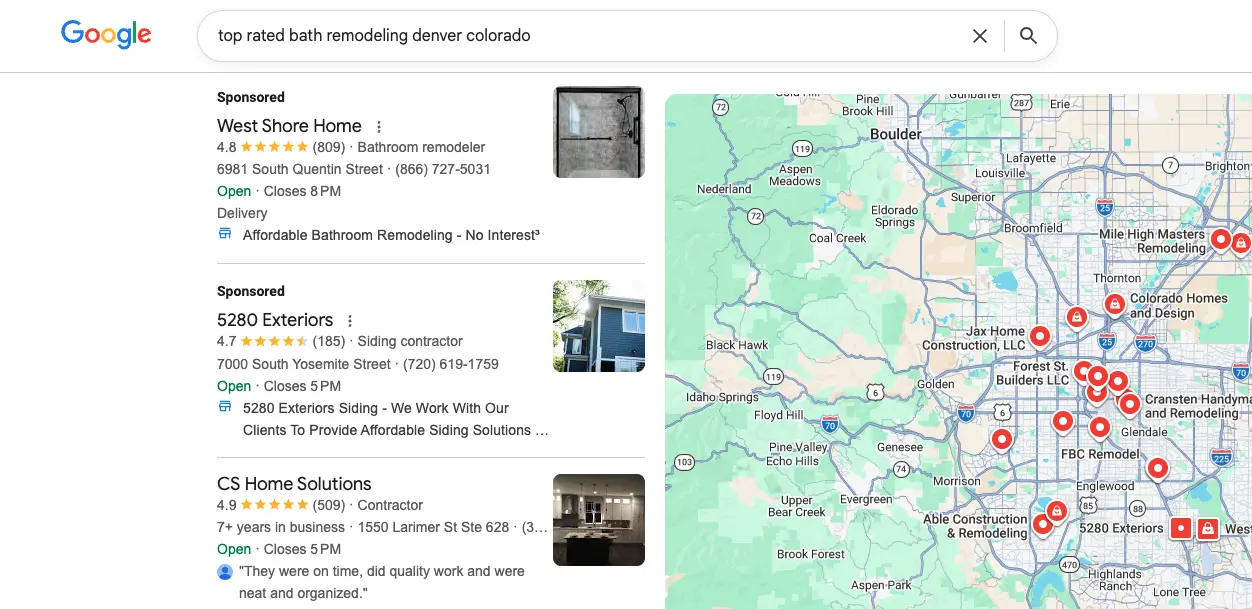
Here’s the bigger picture that most LSA guides won’t tell you: the credit system change is a symptom of a structural problem with depending on any single channel you don’t control.

LSA adoption has surged from roughly 28% of contractors in 2022 to an estimated 70% by late 2025.² More contractors on the platform means higher costs per lead, more competition, and declining lead quality. The contractors reporting the biggest frustrations with the new credit system are the ones who were most dependent on LSAs in the first place.

LSAs are excellent at one thing: capturing homeowners who need a contractor right now and are ready to call. But they’re limited in volume (most remodelers see 10–30 LSA leads per month), limited in targeting control, and now limited in cost protection with the weakened credit system.

The remodelers growing predictably at $2M+ revenue treat LSAs as one piece of a three-part system

  • Google Ads as the primary demand-capture engine — exclusive leads, full targeting control, service-specific landing pages, and conversion tracking that teaches the algorithm what a real lead looks like. We've written a full guide on a Google Ads System for remodelers showinf you all the thing a remodeling contractor needs to consider when planning for a full funnel digital marketing strategy on Google Ads.
  • SEO as the compounding authority play — organic traffic that produces leads at zero marginal cost over time, reducing the percentage of leads you pay for.
  • Brand trust as the conversion layer — real project photography, visible reviews, a clear process explanation, and a Discovery Questionnaire that filters tire-kickers before the first call.

LSAs fit into that system as a trust-building supplement — the Google Verified badge adds credibility, and the pay-per-lead model makes cost predictable for a limited volume of high-intent calls. But they’re not the engine. Google Ads is the engine. SEO is the compounding asset. Brand is the conversion layer. LSAs are the complement.

Build a Lead System That Doesn’t Depend on One Channel

If you’re spending most of your marketing budget on LSAs and wondering why lead quality is slipping, the answer isn’t a better credit process. It’s a different system.

At B&G Growth Marketing, we build lead generation systems for remodelers and design-build firms doing $2M+ in revenue. Google Ads, SEO, landing pages, brand, and tracking — with LSAs as a complement, not a crutch. If you’re ready to stop reacting to bad leads and start controlling your pipeline, schedule a consultation.

FAQ: LSA Lead Credits for Contractors

Can you still dispute leads on Google Local Services Ads?

No. Google removed manual lead disputes in mid-2024. The replacement is an automated credit system where Google’s machine learning reviews charged leads and applies credits for leads it determines are low quality. You can influence the process by rating leads through the “Rate this lead” feedback tool in your LSA dashboard.

How does the automated LSA credit system work?

Google reviews every charged lead within 72 hours using machine learning. If the system determines a lead is invalid — spam, wrong number, duplicate, or otherwise low quality — it credits your account automatically. Credits appear within 30 days. You cannot appeal a decision the automated system makes.

What types of LSA leads no longer qualify for credits?

Google no longer credits leads for “job type not serviced” or “geo not serviced.” If a homeowner calls you about a service you don’t offer or from outside your service area, you will be charged with no recourse. This makes accurate profile setup critical.

How do I get credits for bad LSA leads in 2026?

Rate every lead in your LSA dashboard using the “Rate this lead” tool. Select “Very dissatisfied” and choose the most specific reason (spam, geographic mismatch, wrong service, duplicate). This can trigger a credit review. Based on accounts we manage, the success rate is roughly 15–25% for flagged leads.

How do I stop getting bad leads on LSAs?

Tighten your service categories to only the job types you perform. Narrow your service area to cities and zip codes you actually serve. Match your LSA profile to your Google Business Profile. Answer calls quickly. Build your review count above 50. These profile-level fixes prevent bad leads instead of trying to credit them after the fact.

Are LSAs still worth it for remodelers in 2026?

LSAs are worth it as a supplement to Google Ads and SEO, not as a standalone lead source. Most remodelers see 10–30 LSA leads per month at $25–$80 per lead. The Google Verified badge adds credibility. But the limited volume, limited targeting control, and weakened credit system make LSAs a complement to your lead system, not the engine.

What is the Google Verified badge?

In October 2025, Google consolidated its Google Guaranteed, Google Screened, and License Verified badges into a single “Google Verified” badge. The money-back guarantee that was part of Google Guaranteed was discontinued. The badge still signals that Google has vetted your business, which builds trust with homeowners.

LSAs vs. Google Ads: which is better for contractors?

They serve different purposes. LSAs capture homeowners who are ready to call right now and charge per lead. Google Ads capture homeowners at every stage of the buying process, charge per click, and give you full control over keywords, targeting, landing pages, and conversion tracking. The remodelers with the strongest pipelines run both as parts of one system.

Sources

¹ Google. "About Automated Local Services Ads Lead Credits." Google Local Services Help. https://support.google.com/localservices/answer/15100654

start now

Let’s create your next win.

Let’s talk about results like these for your team.
get started
get started

services

001

Lead Gen Systems

Performance-driven campaigns that attract high-intent leads and keep your pipeline full.

002

website & Creative

Clean, conversion-focused design that builds trust and turns interest into action.

003

Brand Identity & Messaging

Strategic branding that builds credibility, aligns your voice, and supports every channel.

004

Search & Content Strategy

SEO and content built to boost visibility, drive organic traffic, and support long-term growth.

005

Growth Strategy & Consulting

Actionable, insight-led marketing plans that prioritize clarity, ROI, and momentum.

Written By Adrian Garcia

Adrian Garcia is a growth marketing strategist and agency founder who helps service businesses generate consistent, high-quality leads with Google Ads, Meta Ads, and more. He began his career over fifteen years ago running lead generation campaigns for landscaping contractors while still in college, then went on to build performance marketing systems for builders, remodelers, nationwide property developers, and multifamily housing brands. Over time, Adrian became known for simplifying complex marketing into clear, repeatable systems that help businesses grow predictably rather than chase the next tactic.

Related articles

start today

Done Reading? Let’s Start Building.

Turn tactics into traction with a strategy built to perform, no guesswork, no fluff, just results.